
Searching the Lansing Court Docket
No town database holds the Lansing court docket. The documented starting point is the statewide eCourts Portal. It covers Ashe County and opens public case information to anyone. Hold on to the citation or court record number from any paper notice. A full record number narrows things down far better than a name search does. One caution applies here. The online Register of Actions, also called a Case Summary, is a public summary built from the clerk's record. It is not the official case file itself.
If the online result is missing or restricted, fall back on the Ashe County Clerk of Superior Court. Lansing is not its own court jurisdiction. The town's name is not a guaranteed Portal filter either. Search instead with the court-controlled case number, citation number, party name, location, case type, or status fields. A Lansing public result can flag a hearing or a procedural status. Only the clerk, though, issues official copies and the local confirmation.
- Open eCourts Portal and select Smart Search for available public case information.
- Enter a full record or citation number when known. Otherwise, use the documented last-name, first-name order for a party search.
- Use Advanced Filter Options to narrow a broad result by Ashe location, case type, status, or filing date.
- Open an underlined case number to review the available Lansing court docket Register of Actions or Case Summary.
- Call the Ashe County Clerk of Superior Court if a time-sensitive Lansing hearing, older file, restriction, or official copy needs confirmation.
Note: A name search can return up to 200 results, so a long list does not mean every Lansing court record has surfaced.
Lansing Court Docket Search Route
The route to a Lansing court docket runs through a state Portal. It is not a Lansing-built search site. Smart Search takes a record number or a party name. Its documented search-type menu also lists Citation Number, Attorney Name, Business Name, Case Cross-Reference Number, and Nickname. So a search can begin with the court-controlled identifier rather than a town-office lookup. The Portal's Search Hearings tool does a different job. It finds a setting by case number, name, judicial officer, courtroom, location, hearing type, or date range. That split matters when the question is a Lansing court date rather than filing history.
For a standard Odyssey-format record number, the non-case-specific pattern is YYTT######-040. The last three digits mark Ashe County and back up the Lansing search route. Treat the number as a search format, not a copied Lansing case. The official Portal guide also warns that anonymous public access does not open sealed or confidential material. Registration lets you save Lansing cases. Elevated access, meanwhile, stays a restricted route for legally limited categories.
| Portal field | Use for a Lansing court search | Limit |
|---|---|---|
| Record or Citation Number | Use the complete number when it is available. | It must be entered in the system's accepted format. |
| Party Name | Enter a name in last-name, first-name order. | A broad search can return many records. |
| Location and case filters | Narrow a Lansing search to Ashe and a relevant case type or status. | Advanced filters cannot stand alone. |
| Underlined case number | Open the public Register of Actions or Case Summary. | The summary is not the official court record. |
Lansing Municipal Court Basics
Lansing has no municipal court. The town posts no local docket, citation database, court clerk, or city payment portal either. That absence is the central fact. A Lansing matter never begins with a town court lookup. It runs through the Ashe County District Court or Superior Court system, the Ashe County Clerk of Superior Court, the eCourts Portal, and the posted county calendars, depending on the case type.
Ashe County's Judicial Branch location lays out the county trial-court route. Ashe County District Court handles misdemeanors, infractions, family and juvenile matters, plus civil matters within its allocation. Superior Court is the general-jurisdiction trial court. It takes felony trials, civil matters above that allocation, and qualifying appeals. Lansing adds no extra courthouse, clerk, municipal judge, or docket layer.
Note: A Lansing town-government office can answer town-government questions. It does not hold a Lansing court docket or case file.
Lansing Court Docket Context
Lansing is Ashe County's smallest incorporated town. The state demographer's July 1, 2024 municipal estimate says so. That figure is place context only. It says nothing about court filings, citations, open cases, or case outcomes. The routing point is simple. A small population does not create a separate court jurisdiction. It gives no basis for guessing at a Lansing caseload.
The North Carolina municipal population estimates publish the statewide figures behind the Lansing count.
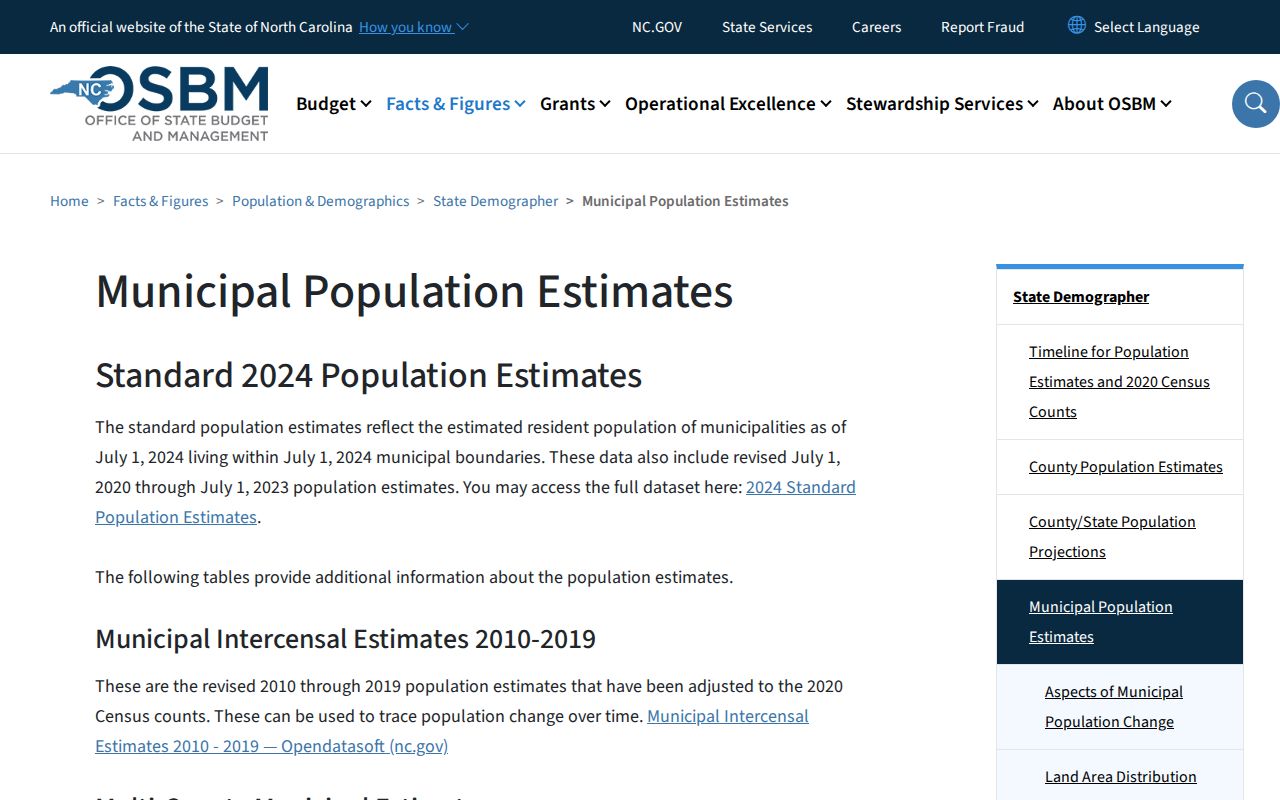
Lansing is a small town. Its population tells you nothing about court volume, which no official court report tallies here. Keep the scale in perspective. A case that starts in Lansing is still an Ashe County state-court matter once it is filed.
Court Dates and Settings in Lansing
To confirm a Lansing court date, work through Ashe County's court channels. Skip any town schedule. Pull the case's Register of Actions first. Then try the Portal's Search Hearings function, or read the county's posted civil and criminal calendars. Search Hearings asks for a location, a hearing type, a search type, and a date range. When hearing data exists, the Portal may display a Hearings section for the case. Still, a calendar row or a search result is only a pointer. When a setting truly matters, get a current confirmation from the clerk. The Portal's own guidance describes these fields. The clerk or a mailed court notice remains the final word on any courtroom number, judge, or case-specific timing for a Lansing hearing.
| Date | The scheduled hearing date, narrowed through the Portal date-range inputs when searching. |
|---|---|
| Time | Confirm the time from the court notice, Portal result when available, or clerk. |
| Courtroom | A Search Hearings search can use courtroom; the official guide says state courtrooms are listed. |
| Judicial officer | The Portal workflow permits a judicial-officer search without establishing a Lansing judge. |
| Setting type | Use the required hearing-type selection to distinguish the scheduled court event. |
Lansing Court Dates Need Ashe Confirmation
A posted calendar is not the last word. The official court-date material itself warns that schedules get revised, hearings get canceled after weather, and a posted entry can differ from the notice a person actually received. For a Lansing hearing that is close in time, hold onto the citation, summons, notice, or case number first. Then run a Search Hearings check. Compare it with the right Ashe civil or criminal calendar. If the Lansing sources disagree, call the clerk before relying on either.
The practical confirmation flow is: case notice or citation → eCourts Portal Search Hearings → Ashe calendar → Ashe County Clerk of Superior Court. The county's criminal calendar is useful for posted sessions, while the calendar service warns that not every schedule is posted and changes may not appear immediately. A missed Lansing court date needs prompt contact with the clerk, not an assumption based on an old calendar entry.
Current-setting check: If a Lansing notice conflicts with a Portal or calendar result, call the Ashe Clerk at (336) 219-1400 before relying on the posted schedule.
Traffic Tickets in Lansing
A Lansing traffic ticket that lands in state court travels the Ashe County District Court path. The court offers no Lansing citation database. It offers no Lansing payment portal either, and no single police or citation workflow applies. Start with the ticket itself. Look it up on the eCourts Portal by citation or record number. Then check the Ashe criminal calendar and ask the Clerk of Superior Court about a current court date.
An eligible case may show an online payment or waiver option. Eligibility turns on the specifics of each case. Paying or waiving can count as a response. That response gives up the right to appear in court. The Ashe County payment information lists the official local channels. Pay online when eligible, pay in person at the clerk's office, or mail citation payments by money order or certified check made out to the Ashe County Clerk of Superior Court. Never mail cash or a personal check for a citation.
A Lansing citation is not a town bill. Before using any state payment screen, read the court's terms for that case. Or ask the clerk how payment affects the court record and any appearance requirement.
Lansing Citations and District Court
The legal term behind a Lansing citation is usually an infraction. It may also be another District Court matter in Ashe County, not a Lansing municipal docket. District Court handles infractions and most misdemeanors in the county system. If a District Court criminal matter is appealed, Superior Court can become the next trial division. That transfer happens within state court. It is not an appeal to any Lansing court. Learning a few Portal terms helps. It keeps a Lansing case lookup aimed at the court process instead of the town name.
- Register of Actions / Case Summary
- The Portal's summary of available public docket entries based on the clerk's official record.
- Infraction
- A case type that the District Court route can handle, including ordinary traffic matters.
- Transferred to Superior Court
- A Portal status that can show the next trial-division location and should be confirmed with the clerk.
- Pending
- A status showing that a case awaits further action, not a final finding about the matter.
Note: No official source establishes a Lansing traffic program, diversion program, or city-specific payment rule, so do not infer any of them from a Lansing citation.
Where Lansing Cases Go
Lansing cases flow through the same county court structure used across Ashe County. A traffic or misdemeanor matter tied to Lansing ordinarily lands in Ashe County District Court. You reach it through the unified clerk route. Superior Court takes felony trials, civil matters above the District Court allocation, and qualifying criminal appeals. Above that sits the North Carolina Court of Appeals. That is the intermediate court for authorized appeals on legal or procedural issues. It never replaces the Ashe clerk as the holder of the local trial-court file.
Record flow: Lansing-related matter → Ashe County District Court or Superior Court → Ashe County Clerk of Superior Court → public eCourts Portal view where available.
The lesson for a Lansing searcher is simple. Go to the record keeper, not a town office. For the full county-wide structure and access channels, the Ashe County court docket overview lays out the broader court system. If a Lansing case involves a transfer, an appeal, a restriction, or a record that seems missing, check the Register of Actions first. Then confirm with the Ashe clerk.
Lansing Town Hall, Not Court Records
Lansing Town Hall has posted an official move notice. That notice does not create a court records counter in town. The notice places Town Hall at 9316 NC Highway 194 N, Lansing, NC 28643. The telephone is (336) 384-3938. Office hours run Tuesday through Thursday, 9:00 a.m. to 4:30 p.m. Friday hours are 9:00 a.m. to noon. Check the newest official notice before any visit, and call ahead. The Town Hall move notice documents the newer Lansing town-office location on the town's official page.
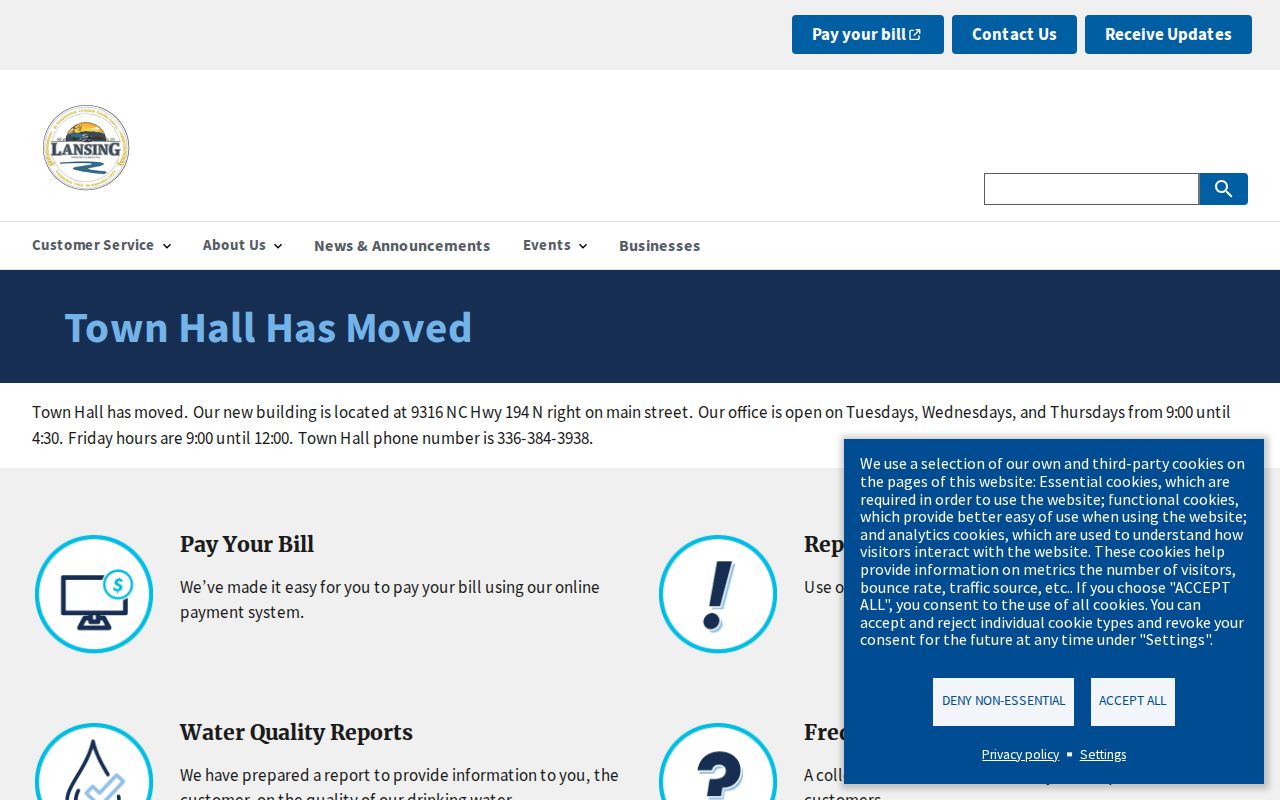
Lansing runs its town business out of Town Hall. That office holds no court files. Case records, certifications, and docket confirmations all live with the Ashe County Clerk of Superior Court at the county courthouse. Town Hall is the wrong counter for a Register of Actions, a certified copy, or a court date.
There is also an address wrinkle. An older official contact page lists 173 B Street and P.O. Box 266, which conflicts with the later move notice. Two official sources, two addresses. Neither one is a second Lansing court location. So treat the mismatch as a town-office question rather than a docket question. The older Lansing contact page preserves the conflicting address as it originally appeared.
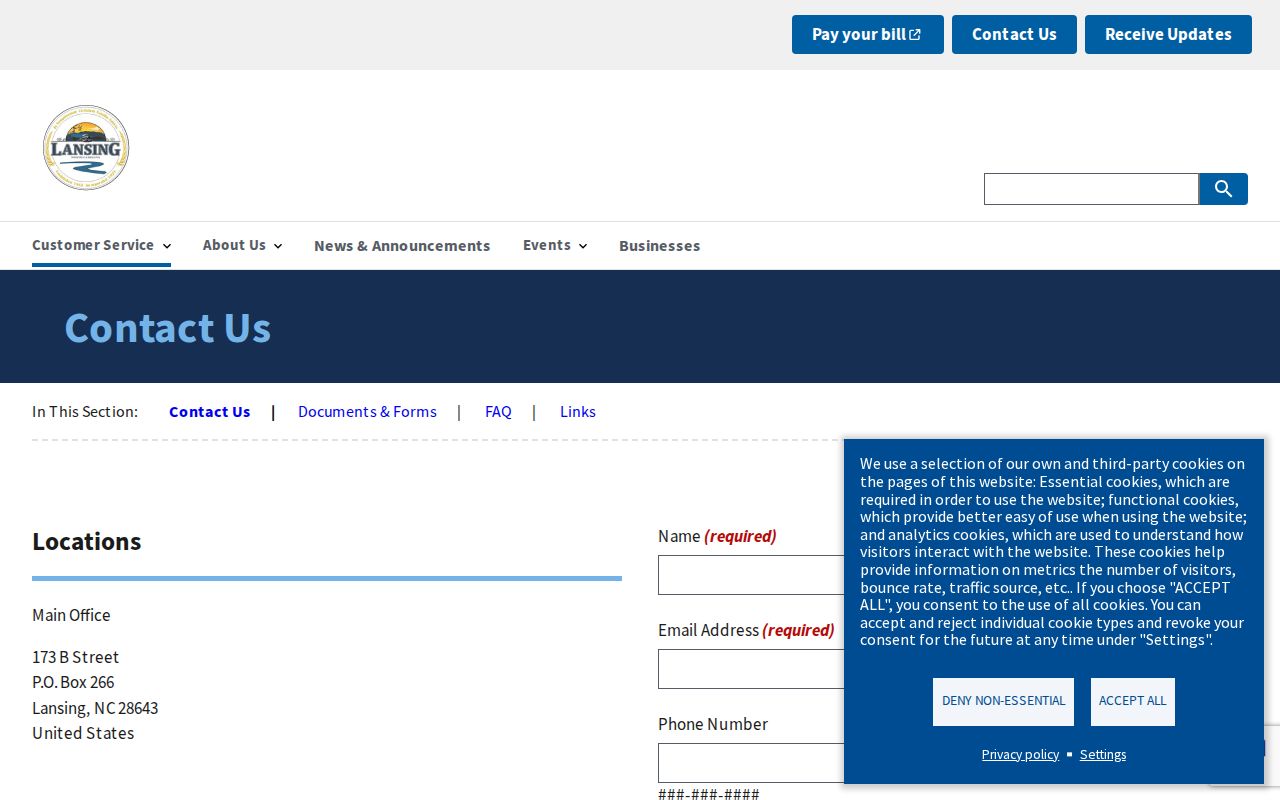
Call the town for town matters. For any Ashe County court record, certified copy, or hearing question, go through the county clerk instead. That split is the safe way to plan a visit.
Lansing Court Record Access Rules
Any Lansing court record sits under North Carolina's state rules for court files. The same rules govern Ashe County. The public can search case information through the Portal. Visitors may inspect records at the courthouse where law allows, and request copies from the county where the case was filed. A Portal Register of Actions shows public docket events. It is not the official court record. For an official copy, an older file, an audio request, or a restricted result, contact the county clerk. Note that the NCAOC public-record policies describe a separate agency-record request process with its own custodian limits.
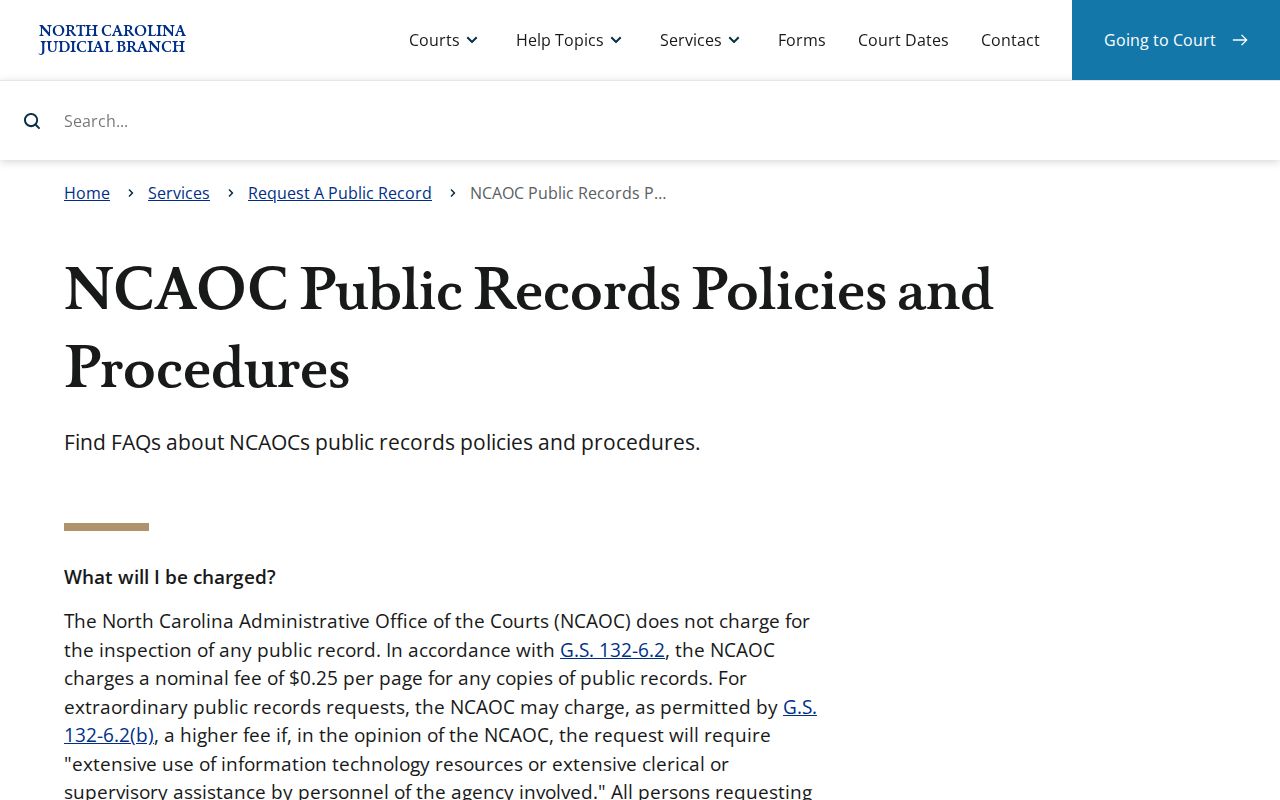
That state policy does not make NCAOC the keeper of local case files. For Lansing court documents and case information, the request goes to the clerk in the county where the case was filed. That clerk is the Ashe County Clerk of Superior Court.
Key rules for Lansing court records:
G.S. 7A-109 requires clerks to keep court records, files, dockets, and indexes, with public inspection where law permits.
North Carolina Public Records Act, G.S. 132-1 states the state's public-record policy, subject to confidentiality laws.
G.S. 7B-3000 restricts juvenile-record inspection absent statutory authorization or a court order.
A Lansing Portal search may leave out sealed, confidential, juvenile, and other restricted matters. Elevated access is not a way around a sealed record. If a result is missing or limited, ask the clerk about the lawful process instead of guessing.
Lansing Records at Ashe Clerk
The comparison comes down to one line. The town office handles municipal business, and the Ashe County Clerk of Superior Court keeps the court file. That clerk is the local route for a missing Portal result, a certified record, a current hearing confirmation, in-person inspection where available, and copies of court files. The courthouse also offers a public terminal for criminal, civil, special-proceeding, and estate information. Lansing itself has no clerk desk or public terminal. There is no dedicated court email, and no court copy form at the town office.
Ashe County Clerk of Superior Court
Ashe County Courthouse
150 Government Circle, Suite 3100
Jefferson, NC 28640
(336) 219-1400
Weekdays, 8:30 a.m. to 5:00 p.m.
Start any Lansing court record request with the case number. Also state the type of document needed. The Ashe County Courthouse listing shows the clerk's address, phone, and weekday hours. Call ahead before making a special trip. Access rules, fees, confidentiality, and file availability can all affect what the clerk can hand over.
Note: The Portal is a free route when a public result is available. For an official or certified Lansing court document, go to the clerk. The clerk-issued record is the one that counts.