
Searching the Ashe County Court Docket
Start with the North Carolina eCourts Portal. Ashe County is part of the statewide eCourts system. Smart Search is the fastest way to reach an Ashe County court docket online. Enter a record number or a party name. The number is the sharper key. Name searches work best with last name first, then first name. That is just how the official instructions describe it. What the Portal shows is a public Case Summary, or Register of Actions. It is a summary of what the clerk maintains. Do not treat it as the official record itself.
Keep your citation, summons, or other court paper close at hand. It often carries the record number, the court division, and a written setting. For a simple date question, Search Hearings and the county calendar beat scrolling a long name-result list. Anything missing, sealed, or too old for the online system goes to the Ashe County Clerk of Superior Court. That office also handles paper-file access and certified copies.
- Open the eCourts Portal and choose Smart Search for a public case lookup.
- Enter the full record number, or use the party-name format shown in the official Portal instructions.
- Apply location, case-type, status, or filing-date filters after entering the basic criterion.
- Select an underlined case number to read the available Register of Actions or Case Summary.
- Use Search Hearings, a county calendar, or the clerk to confirm a setting and request an official record when needed.
Note: A Portal result can find a case. For an official copy or a time-sensitive date, confirm with the clerk.
Ashe County eCourts Portal Search
The Judicial Branch calls eCourts the statewide Enterprise Justice and Odyssey environment. The public Portal bundles four functions. They are Smart Search, Search Hearings, Make Payments for eligible obligations, and NC Judgment Search. Anyone can search anonymously. Register an account to save cases. You can also request Elevated Access for the limited categories the law authorizes. Signing up never opens sealed or confidential material.
The eCourts overview explains the statewide system that now serves Ashe County. It also shows the public-service functions. For a docket question, Smart Search comes first. File & Serve is the separate system attorneys and parties use for electronic filing.
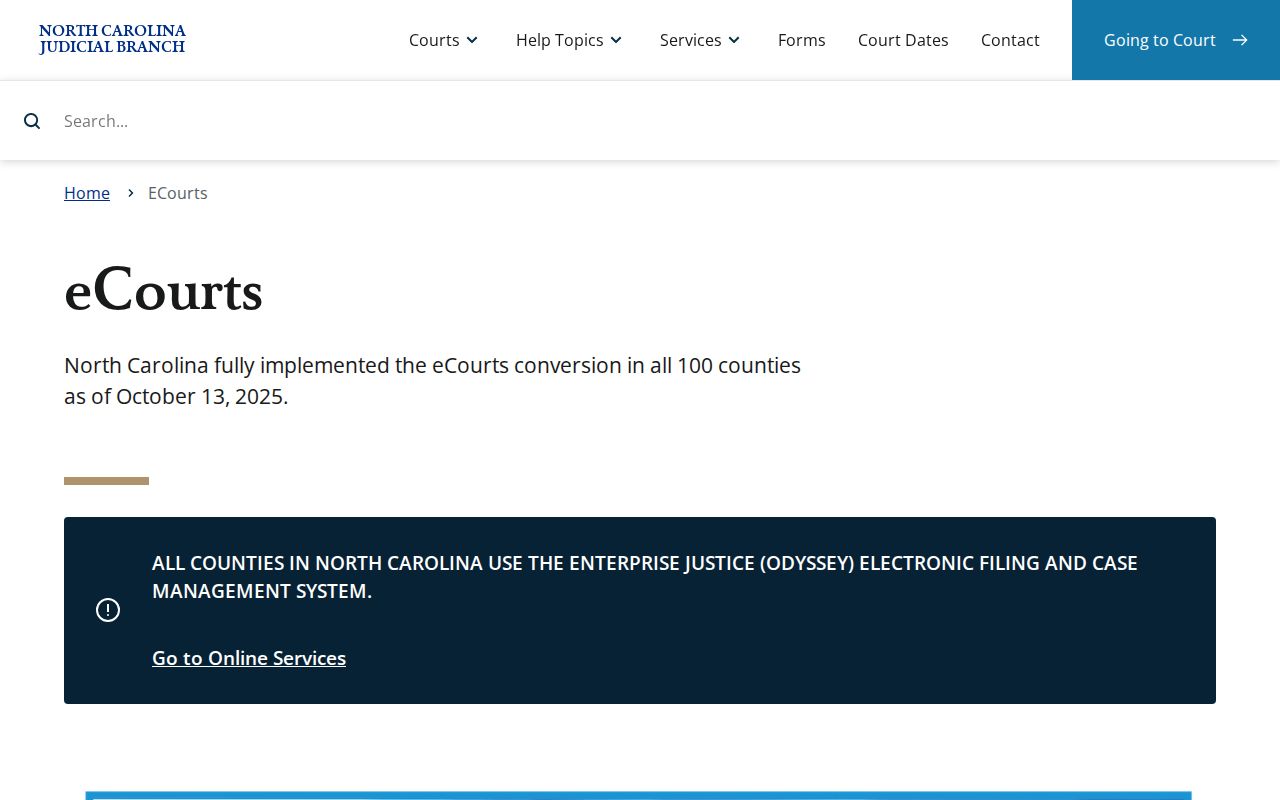
The eCourts display saves Ashe County court docket searchers from hunting for a county-built lookup site. It does not replace the clerk. The local clerk still keeps the official court file.
| Portal control | Use in an Ashe search | Important limit |
|---|---|---|
| Basic Search Criteria | Enter a record number or party name. | A basic criterion is required before filters can narrow results. |
| Location | Narrow a broad result to Ashe. | It is an advanced filter, not a stand-alone search. |
| Case Type and Status | Refine public criminal, infraction, civil, estate, or related results. | Available values vary by case category. |
| Underlined Case Number | Open the available Case Summary. | That summary is not a certified court record. |
Inside an Ashe County Court Docket
Locals call the online event list a docket. The Portal itself calls it a Register of Actions or Case Summary. Either way, it is a summary of public entries drawn from the clerk's official record. It can identify the case, list parties, describe an available status, and show public events. Some matters add sections for hearings, dispositions, causes of action, financial information, or documents. Access rules decide which. A blank category proves nothing about the underlying file.
Birth dates are masked in the public display, and sensitive material is left out. A status like Pending, Disposed, Completed, Reopened, or Transferred to Superior Court marks a broad procedural position. It is not a full legal answer. Read the date sequence and entry labels before concluding anything. For an underlying document, a certified result, or a field you cannot see online, ask the clerk.
| Case Number | The exact record identifier. Odyssey numbers commonly follow YYTT######-040 for Ashe County. |
|---|---|
| Party Information | Role-linked participant data; the public view masks certain sensitive fields. |
| Register Entries | Chronological public case events summarized from the clerk’s record. |
| Hearings | Available setting information when the case contains it; Search Hearings is a separate date tool. |
| Disposition | A recorded outcome or procedural result, not a substitute for a certified order. |
| Financial Information | A section shown when data exists; current totals should be confirmed with the clerk. |
Ashe County Case Numbers End 040
One full number prevents the most common docket search mistake. The Judicial Branch's Odyssey explanation breaks a record number into a two-digit year, a two-letter case type, a six-digit sequence, and a three-digit county identifier after the hyphen. Ashe County's identifier is 040. The format YYTT######-040 is an example only, not a real case number. Copying the full number from a court paper beats constructing one from a date or name.
Numbers matter most when several people share a name. Smart Search caps results at 200. Hit that ceiling and turn to advanced options to narrow by Location, case type, status, filing date, or supported party criteria. A wildcard helps when the indexed spelling is uncertain. Still, it is only a search aid. A matching name alone does not prove you found the right person.
Courts That Keep Dockets in Ashe County
Ashe County has one unified state-court record path rather than competing county clerk offices. Per the Judicial Branch directory, Superior Court, District Court, and the prosecutorial district all sit in District 34. The division printed on a case explains the type and stage of the matter. It does not point you to a different records office. The Ashe County court directory and the Clerk of Superior Court stay the local hub.
The state court-types overview lays out the trial-court structure Ashe follows, with statewide context for choosing the division shown on an Ashe County docket.
A court label tells you the record's procedural route. Read it together with the case type and Register of Actions, since some matters transfer or appeal inside the unified system.
| Court or officer | Docket covers | Where to search or confirm |
|---|---|---|
| Ashe County Superior Court | Felony trials, civil claims above $25,000, and specified appeals. | eCourts Portal and Ashe County Clerk of Superior Court. |
| Ashe County District Court | Misdemeanors, traffic infractions, family, juvenile, and lower-allocation civil matters. | eCourts Portal, calendars, and the same clerk office. |
| Ashe County Magistrates | Small claims generally under $10,000 and preliminary criminal functions. | Unified clerk/courthouse route; magistrates are District Court officers. |
| North Carolina Court of Appeals | State appellate matters. | State appellate process, not a separate Ashe clerk case file. |
The District Court overview gives the state context for the Ashe County division handling misdemeanors, infractions, and other matters within its allocation.
Note: Probate and estate work is a special clerk function within the Superior Court Division. Its local record route still starts with the Ashe clerk.
Ashe County District 34 Routes
Ashe County now sits in District 34. Keep that number in mind. A few older civil and criminal calendar plans posted locally still say Judicial District 23. Those plans still have value as history, yet their heading is not a current court-directory label. For a live assignment, trust the case record, the county directory, or a call to the clerk over any aging PDF.
The Judicial Branch's judicial district maps show where the county falls in the present system. That official material places an Ashe County court docket in its statewide district context.
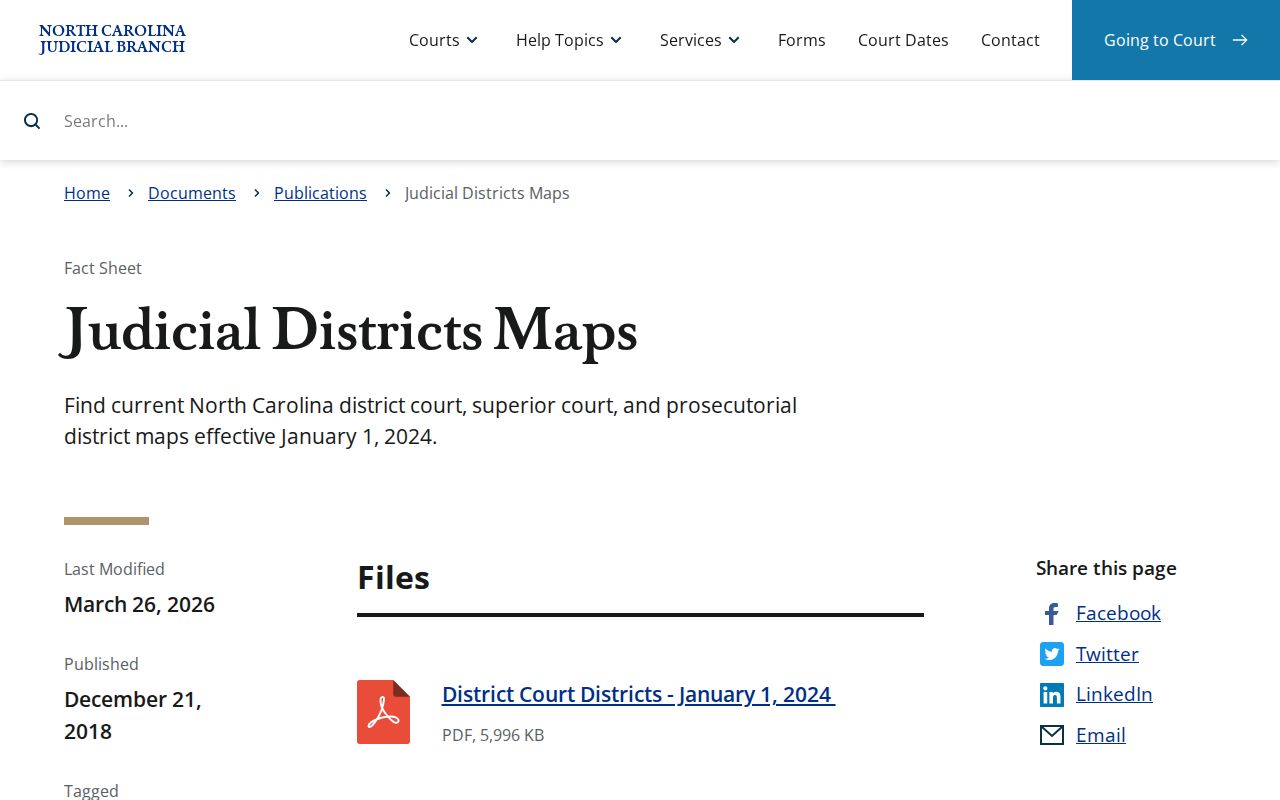
District labels are about court administration, nothing more. When you are following one record, the court name, case type, and current status are the details that matter.
How to Find Court Dates and Settings
Where should you look for an Ashe County setting? It depends on the question. A Case Summary can display a Hearings section when hearing information exists, while Portal Search Hearings is the direct query tool: pick a search type, the Ashe location, a hearing type, and a date range. The county also links separate published civil and criminal calendars. A session calendar can help you spot a scheduled court event, but it is not personal notice, and it can change after publication.
The Judicial Branch's court-dates page lays out the statewide date tools and how its service route works. If a written notice conflicts with an online result, a matter was continued, or a closure has affected court, call the clerk before you rely on any date.
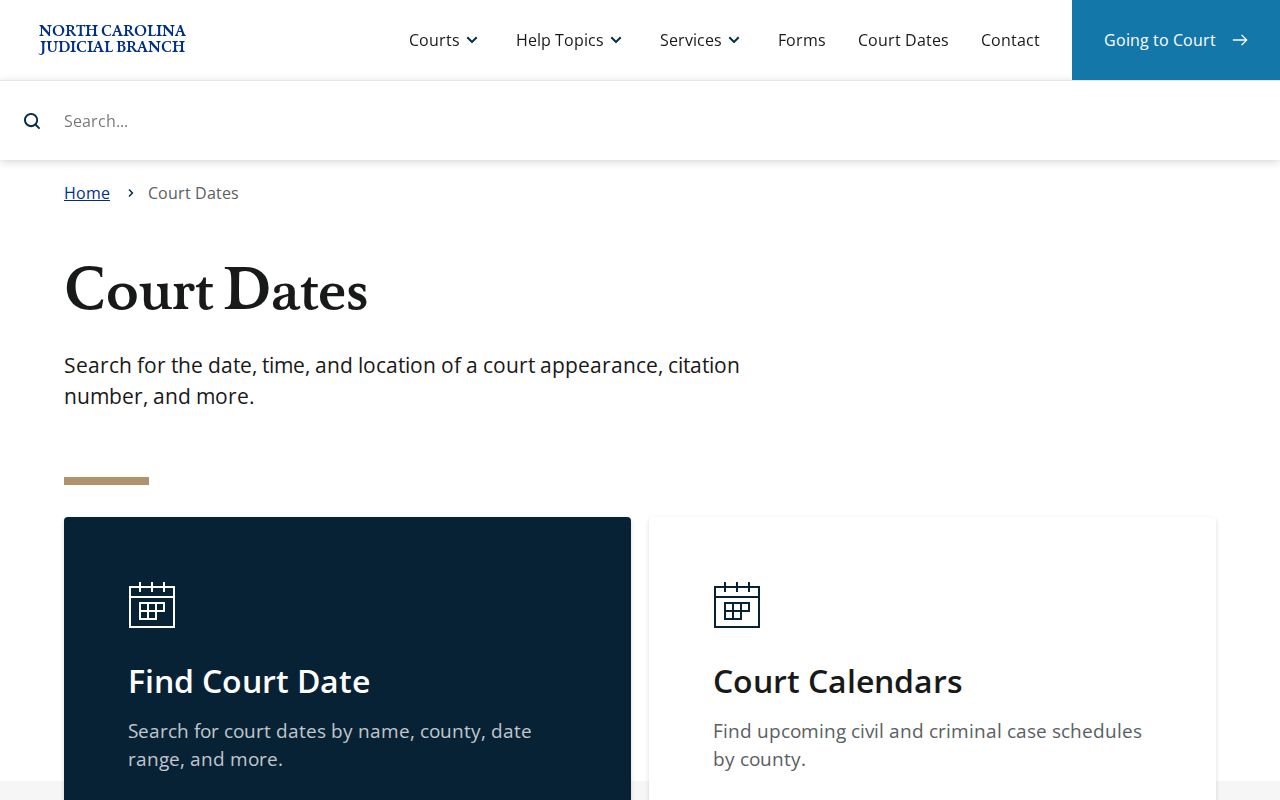
A setting is simply a scheduled court event. It might be an arraignment, motion hearing, pretrial event, trial, plea, or other court action. A continuance postpones a matter; a reset is a later setting that replaces or supplements the earlier one.
Ashe County Civil and Criminal Calendars
The county's online Civil Calendars and Criminal Calendars are separate tools. Each one differs from the individual Case Summary. Take the civil route for civil postings. Use the criminal route for criminal or infraction sessions. Once you have a result, compare it against the case number. Also check your written notice and the current Search Hearings information.
That calendar interface is an official state service linked from Ashe County's court page. It helps with planning a search. But when time is tight or the case just changed, it is no substitute for a clerk-confirmed setting. A calendar can list a session yet miss the latest update to a particular case. For a fuller date-specific explanation, see the Ashe County Court Dates page.
Ashe County July 2025 Court Shift
On July 21, 2025, Ashe County went live on eCourts. It was part of the state's Track 9 rollout. Enterprise Justice, Portal, and File & Serve all arrived with it. By October 2025, the Judicial Branch reported the eCourts conversion complete in all 100 counties. That shift explains why a modern Ashe County docket search starts in Portal. It does so even for readers who remember an earlier local paper or a legacy-system process.
The official Ashe eCourts announcement documents the county's rollout. It ties the statewide change to the local record-search path.
Older files and scanned documents can still take a call to the clerk. A Portal record is not a promise that every historical paper, image, or sensitive entry has been digitized for public display.
Public Access to Court Dockets
North Carolina law favors public access to court records where nothing restricts it. The clerk must keep court records and files. The same duty covers dockets and indexes. The law generally permits public inspection during regular office hours unless another law limits it. The North Carolina Public Records Act sets a broad public-record policy too, though court-file access still bends to confidentiality, redaction, sealing, and case-specific rules.
Access runs through more than one channel. The public Portal is one; the clerk's office and a public terminal are another. Neither one opens every field or document. Juvenile matters can be restricted or unavailable. So can sealed records, confidential proceedings, unreturned warrants, protective-order records, and sensitive personal information. Elevated Access does not work as a public bypass around sealed material.
Key Rules:
G.S. 7A-109 requires clerks to maintain records, files, dockets, and indexes and supports public inspection where law allows.
G.S. 132-1 states North Carolina’s public-record policy, subject to specific confidentiality laws.
G.S. 7B-3000 restricts public inspection of juvenile records absent statutory authorization or a court order.
G.S. 15A-145 is one expunction route, with eligibility depending on the statute and case facts.
When an Ashe County Portal Search Fails
A no-match result is not the final word. Start with the basics: spelling, last-name-first-name order, and the full record number. Then ask what explains the gap. It might be a different county, an older file, a brand-new filing, or a restricted category. If a broad query floods you with results, narrow it with the documented filters. An omitted result is never proof that no court record existed.
Legal limits also shape what the public sees. A sealed or confidential file stays unavailable to ordinary public search. Juvenile and protective-order categories can be restricted. Portal may show a result with no document image, even while the clerk holds the underlying file. The right move is a lawful inquiry to the Ashe clerk. Ask about the record, its availability, or the correct procedure. That beats a guess about hidden content.
Docket Records at the Clerk's Office
Every Ashe County court file starts at one desk. The Ashe County Clerk of Superior Court keeps both court records. One office holds Superior Court and District Court files. These span criminal, civil, domestic, special proceedings, estates, and traffic. The clerk is your route in several cases. Use it for a certified copy, an older paper file, a record that Portal shows only in part, or a local confirmation of a court date.
The unified local office is listed in the official Ashe contact directory. A clerk-issued document carries weight that a free Portal display does not. Under G.S. 7A-308, statewide fees include a $3 certificate under seal, a $10 exemplification, and copy-preparation charges. Ask the clerk about the current request method and total cost. Do that before you send any payment. The state records-request form covers agency-held Administrative Office of the Courts material, so it is not the normal path for an Ashe case-file document.
Ashe County Clerk of Superior Court
Ashe County Courthouse, 150 Government Circle, Suite 3100
Jefferson, NC 28640
(336) 219-1400
Monday through Friday, 8:30 a.m. to 5:00 p.m.
Note: The courthouse itself is the in-person fallback for docket records. No particular terminal, printer, or staff-assistance setup is posted, so ask at the clerk's counter.
Ashe County Docket or Federal Docket
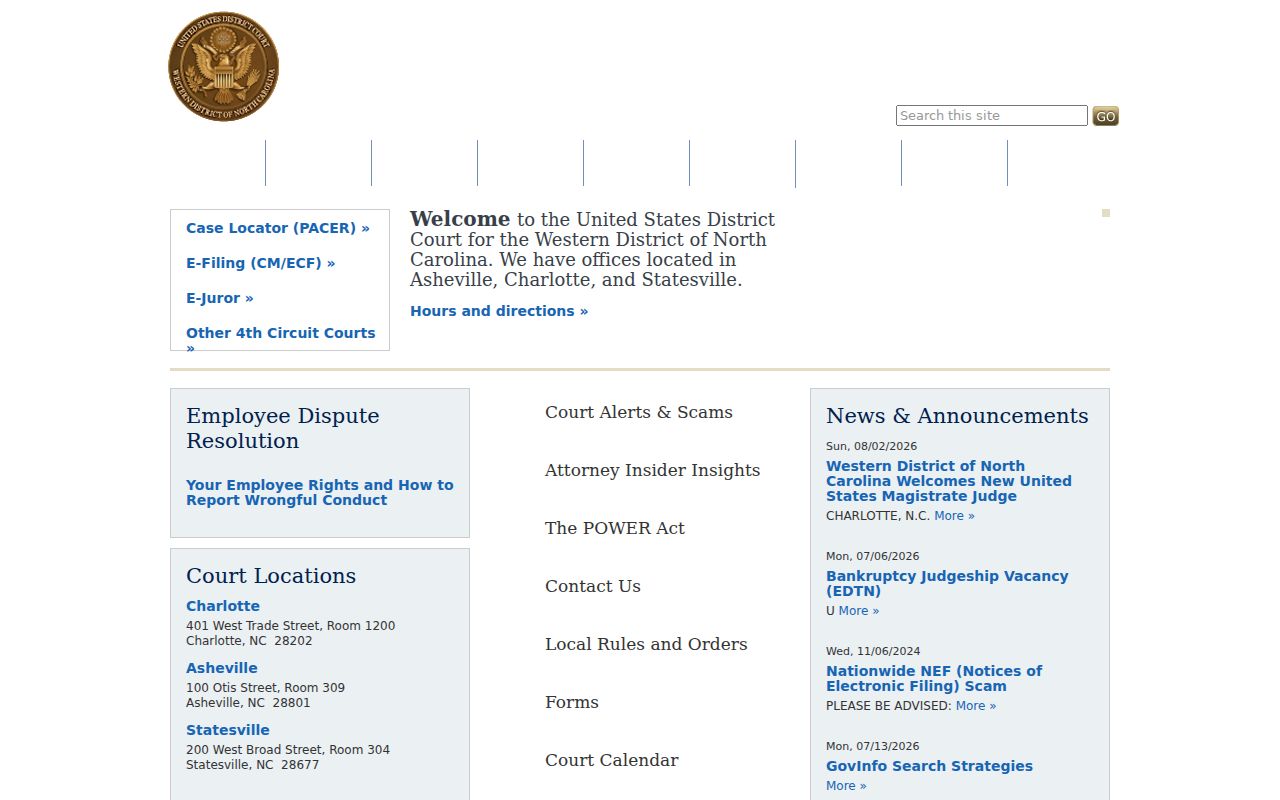
State court and federal court run on separate tracks. A case filed in Ashe County Superior Court or District Court stays with the Ashe clerk. It also stays in the state Portal. A federal case takes a different route. If it touches the county, it goes to the U.S. District Court for the Western District of North Carolina instead. That court places Ashe in its Statesville Division. PACER is the official federal docket service, with CM/ECF handling filings.
Start any federal search at the Western District of North Carolina site. Its official page shows a federal docket. That docket is fully separate from an Ashe County court docket.
PACER is the official federal docket-and-document service. Its access page matters only for a federal case; it cannot replace Portal for an Ashe state-court matter.
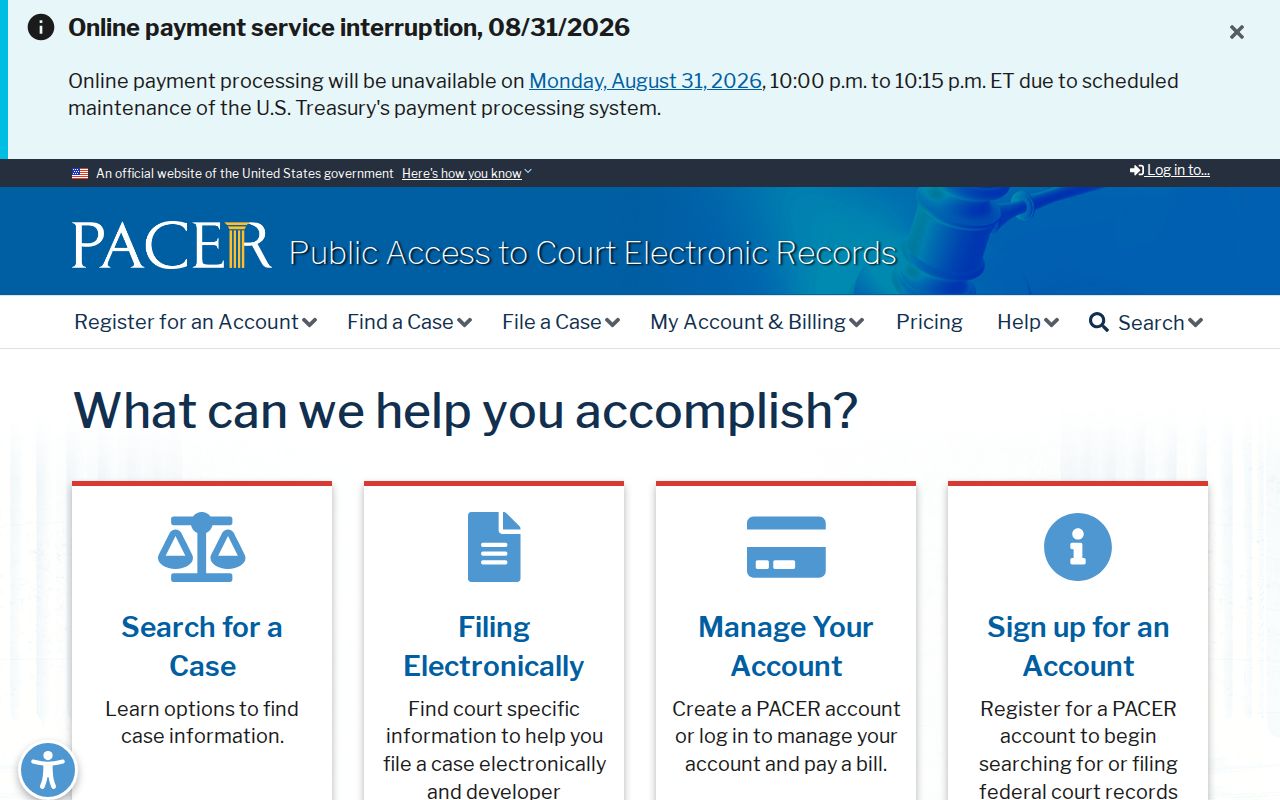
Federal case numbers, fees, and filings live in their own system. The Ashe clerk cannot certify a federal filing. In the same way, PACER cannot give you an official state-court copy.
Ashe County Court Dockets by City
Ashe County has three incorporated towns. That count comes from the state's July 1, 2024 municipal estimates: Jefferson, West Jefferson, and Lansing. None runs its own municipal court docket or town court portal. A traffic ticket, criminal charge, civil suit, or small-claims matter tied to any of these towns follows the county path. That path runs through District Court, Superior Court, the Ashe clerk, Portal, and the court calendar. Each town profile can sort out the local civic offices. The case lookup stays on the state system.
Jefferson Docket Search
2024 estimate: 1,638. Jefferson is the county seat, while court records remain with the Ashe clerk.
West Jefferson Docket Search
2024 estimate: 1,365. No separate town court portal was located in official sources.
Lansing Docket Search
2024 estimate: 125. Town-office information is distinct from the county court record route.
Map and Directions to the Ashe County Courthouse
Superior Court District 34, District Court District 34, and the Ashe County Clerk of Superior Court's records counter share a single campus at 150 Government Circle in Jefferson. Ashe is a one-courthouse county: there is no separate civil center, criminal justice center, or municipal-court counter, so a felony, civil, estate, or traffic file all route through the same building and the same Suite 3100 clerk's office.
Ashe County Courthouse
150 Government Circle, Suite 3100
Jefferson, NC 28640
(336) 219-1400
Monday through Friday, 8:30 a.m. to 5:00 p.m.
No official source publishes a parking rule, entry-screening checklist, device policy, or terminal count for the Jefferson courthouse, so call (336) 219-1400 before a records trip to confirm current procedure and whether the needed file is available for in-person inspection.